

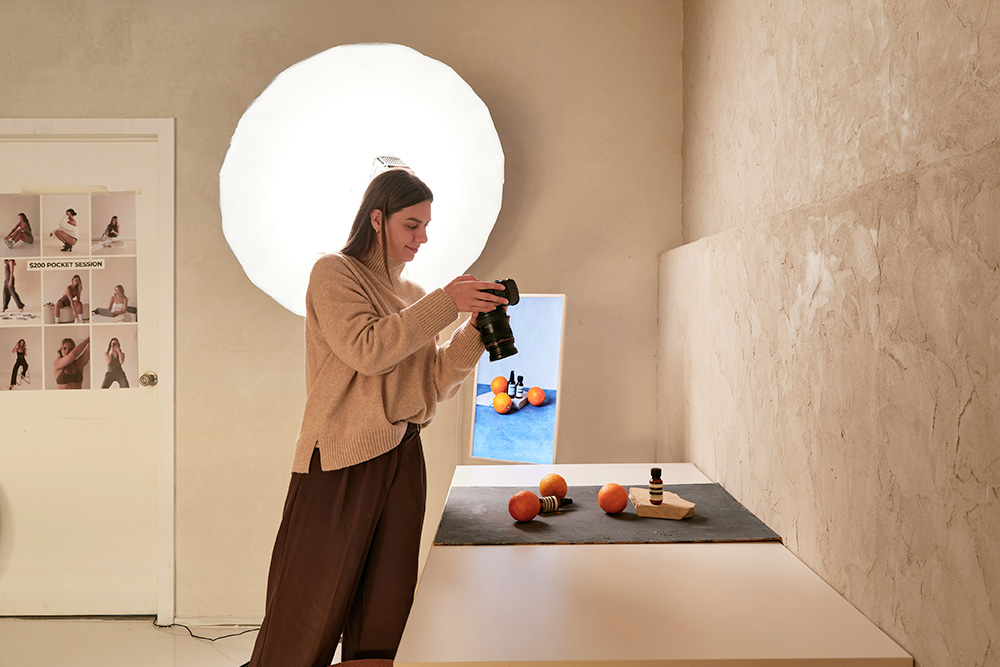
▲ Brand Photography ≠ Product Photography?
One common mistake for many emerging brands is to confuse brand photography with product photography.
• Product photography focuses on showcasing the product itself—materials, function, and fine details.
• Brand photography, on the other hand, is about storytelling. It incorporates environment, composition, lighting, and people to emotionally resonate with the audience and reflect the brand’s philosophy.
For instance, when shooting a cup of coffee:
• Product photography may emphasize the cup’s texture and latte art.
• Brand photography may capture the cozy café ambiance or the interaction between a person and their drink—expressing the brand’s lifestyle message of comfort and warmth.
▲ Defining the Style: Clean & Commercial vs. Warm & Lifestyle
Brand photography style directly shapes your visual identity. Two primary approaches are:
• Clean & Commercial
Best for brands emphasizing quality, technology, and professionalism—such as high-end beauty, precision devices, or minimalist design labels. This style favors symmetry, negative space, strong lines, and cool-toned lighting to highlight a product’s premium appeal.
• Warm & Lifestyle
Ideal for emotionally-driven, approachable brands in sectors like F&B, fashion, or home lifestyle. This style uses natural light, candid scenarios, and human presence to express warmth and authenticity.
Choosing the right style depends on your target audience, industry attributes, and brand personality—it should be a strategic decision, not an aesthetic guess.
▲ Scripted for Success: Industry-Based Photography Planning
A successful shoot begins with a tailored photography script. Here are sample strategies for various industries:
• F&B Brands:
Highlight freshness, texture, and dining ambiance. Combine “still-life close-ups” with “interactive moments”—like the warmth behind kitchen scenes or customers engaging with dishes.
• Fashion Brands:
Showcase attitude and personality. Use models in motion, urban backdrops, or nature settings to reflect the brand’s visual energy and editorial quality.
• Beauty Brands:
Emphasize texture, skin feel, and usage context. Merge product visuals with skin tones and nuanced lighting to create a light, transparent, and luxurious image experience.
Every click of the shutter should be grounded in the brand’s core values. Pre-visualization is essential.
▲ The Power of Editing: Color Grading Shapes Brand Tone
Photography isn’t complete without thoughtful post-production. Color grading plays a pivotal role in setting the emotional tone of the brand:
• Cool blue-grays evoke minimalism, luxury, and rationality.
• Warm beige tones communicate intimacy, approachability, and lifestyle richness.
• High-contrast, saturated palettes fit bold, youthful, and trend-forward brands.
Establishing a consistent visual color language across content and platforms reinforces brand recognition and emotional coherence.
▲ From Lens to Feed: Integrating Photography with Social Strategy
Great photography shouldn’t be archived in a folder—it should drive your content strategy. Leverage photography across platforms for maximum impact:
• Post authentic brand stories on Instagram and RED to enhance emotional connection.
• Use high-resolution product and scene imagery on websites and brochures to reinforce professionalism.
• Update visuals around campaigns or festive occasions to maintain freshness and relevance.
For premium brands, content quality matters more than posting frequency. Every image should extend your brand’s value and narrative.
▲ Conclusion: Let Photography Be Your Most Powerful Silent Spokesperson
In a world overwhelmed by information, visuals are your strongest competitive asset. Exceptional brand photography doesn’t just look good—it communicates trust, values, and soul.
If building a premium brand is a long-term journey of trust, then photography is the quiet yet powerful storyteller along the way.
To create a visual identity system that truly reflects your brand’s essence, contact the team at BOM Creation. Every image we craft is more than a picture—it’s your brand’s silent ambassador.